Categories
Tags
-
#Sterile API facility design consultants in India
#Cosmetics facility design consultants in India
#HVAC design for pharma manufacturing
#cGMP facility design consultancy
#Pharma engineering services for biotech and injectables
#facility design
#OSD (Oral Solid Dosage) plant design consultancy
#HVAC & MEP Design for Pharma
#Top pharma facility design consultants worldwide
#Clean Room Deisgn Consultants India
#Pharma plant design & validation services
Archives
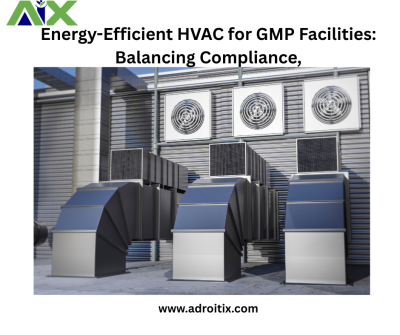
Energy-Efficient HVAC for GMP Facilities: Balancing Compliance,
-
In GMP-regulated facilities, HVAC systems do far more than condition air—they protect product quality, maintain contamination control, and support regulatory compliance. At the same time, HVAC is often the single largest consumer of energy in pharmaceutical manufacturing. As sustainability targets tighten and operating costs rise, energy-efficient HVAC for GMP facilities has become a strategic engineering priority rather than a cost-saving afterthought.
The challenge lies in improving energy performance without diluting GMP control.
Why HVAC Efficiency Matters in GMP Environments
GMP facilities require:
- High air change rates
- Precise temperature and humidity control
- Continuous operation and monitoring
- Stringent filtration and pressure cascades
These demands make HVAC inherently energy-intensive. Poorly optimized systems lead to excessive operating costs, unstable environmental conditions, and increased maintenance burden—all of which impact compliance and reliability.
Core Principles of Energy-Efficient HVAC Design for GMP Facilities
1. Risk-Based Air Change Rate Optimization
Not all GMP areas require the same level of air changes. Energy-efficient design applies risk-based classification to:
- Optimize ACH based on room function
- Avoid blanket overdesign
- Maintain compliance while reducing fan energy
This approach aligns HVAC performance with actual contamination risk.
2. Intelligent Zoning & HVAC Segregation
Effective zoning allows HVAC systems to operate only where needed. Best practices include:
- Independent systems for critical and non-critical areas
- Separate air handling for high-risk zones
- Minimizing cross-zone energy losses
Proper zoning enhances both control and efficiency.
3. High-Efficiency Air Handling Units
Modern GMP HVAC systems integrate:
- Variable frequency drives (VFDs)
- High-efficiency fans and motors
- Optimized coil and filter configurations
These components significantly reduce power consumption while maintaining stable conditions.
4. Heat Recovery & Energy Reuse
GMP facilities often exhaust large volumes of conditioned air. Energy-efficient designs recover this energy through:
- Heat recovery wheels or coils
- Sensible heat recovery systems
- Process-to-HVAC energy integration
Recovered energy directly reduces heating and cooling loads.
5. Advanced Controls & Automation
Smart HVAC controls enable:
- Demand-based airflow adjustment
- Night setback and occupancy-based operation
- Continuous performance monitoring
Automation transforms HVAC from a fixed-load system into a responsive, efficient asset.
6. Cleanroom Envelope & Leakage Control
HVAC efficiency is closely tied to architectural performance. Key design considerations include:
- Airtight cleanroom construction
- Controlled door openings
- Optimized pressure integrity
Reducing air leakage lowers HVAC demand without affecting GMP compliance.
7. Lifecycle-Driven HVAC Design
Energy efficiency must be evaluated over the system lifecycle, not just at startup. This includes:
- Ease of maintenance
- Filter life optimization
- Energy monitoring and benchmarking
Lifecycle thinking delivers sustained efficiency gains.
Aligning Energy Efficiency with GMP Compliance
Regulatory expectations do not oppose efficiency—they demand control. Energy-efficient HVAC designs must demonstrate:
- Stable environmental conditions
- Robust alarm and monitoring systems
- Documented performance qualification
When properly engineered, efficiency enhances—not compromises—compliance.
Role of Pharma Engineering Consultants
Specialized engineering consultants ensure HVAC efficiency strategies are:
- Risk-based and GMP-aligned
- Validated through qualification protocols
- Integrated with facility operations
Their expertise balances regulatory expectations with sustainability goals.
Conclusion
Energy-efficient HVAC systems are no longer optional in GMP facilities—they are essential for sustainable, compliant pharmaceutical manufacturing. By combining intelligent design, advanced controls, and lifecycle planning, manufacturers can significantly reduce energy consumption while maintaining uncompromised environmental control.
In GMP environments, true efficiency is achieved when performance, compliance, and sustainability work together—not in isolation.