Maritime Simulators Market Forecast 2026–2035: Regional Insight
-
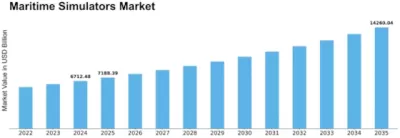
The Maritime Simulators Market is witnessing sustained expansion as the global maritime industry places increasing emphasis on safety, efficiency, and regulatory compliance. According to Market Research Future (MRFR), maritime simulators have become an essential training tool for commercial shipping operators, naval forces, and port authorities. The growing complexity of vessel operations and strict international safety standards are contributing directly to the rising market size and industry growth. the Maritime Simulators industry is projected to grow from 7188.39 USD Billion in 2025 to 14260.04 USD Billion by 2035, exhibiting a compound annual growth rate (CAGR) of 7.09% during the forecast period 2025 - 2035
Maritime simulators provide realistic, computer-based environments that allow trainees to practice navigation, ship handling, engine operations, and emergency response without real-world risks. This capability has significantly improved training effectiveness while reducing operational costs. As a result, simulator-based training is increasingly replacing traditional onboard learning methods, supporting the steady growth of the maritime simulators market.
From a Maritime Simulators Market analysis perspective, the industry is segmented by simulator type, application, and end user. Full mission bridge simulators hold a prominent market share due to their advanced visualization capabilities and ability to replicate real-world maritime conditions. Engine room simulators are also gaining importance as vessels become more technologically advanced and require specialized engineering skills. These segments collectively contribute to the overall expansion of the maritime simulators market size.
One of the key growth drivers is the rising demand for skilled maritime professionals. The global shortage of trained seafarers has compelled shipping companies and naval organizations to invest in high-quality training solutions. Maritime simulators allow organizations to train personnel more efficiently while ensuring compliance with international maritime regulations. This growing reliance on simulation-based learning continues to strengthen the market outlook.
Technological innovation remains a defining market trend. Advancements in virtual reality, augmented reality, and artificial intelligence are enhancing simulator realism and training outcomes. These technologies allow trainees to experience complex scenarios such as adverse weather, congested waterways, and emergency situations. As these capabilities improve, simulator adoption is expected to increase across both commercial and defense maritime sectors.
The share of defense applications remains significant within the maritime simulators market. Naval forces rely heavily on simulators for mission rehearsal, tactical training, and crew coordination. At the same time, commercial shipping companies are expanding simulator usage to improve operational efficiency and reduce accident-related costs. This dual demand structure supports stable and diversified market growth.
Regionally, developed maritime economies continue to dominate the market due to strong maritime infrastructure and regulatory enforcement. However, emerging economies are gradually increasing investments in maritime training facilities, contributing to broader global market expansion. This regional diversification is expected to support long-term market stability.
In conclusion, the maritime simulators market continues to grow as training modernization becomes a strategic priority for maritime stakeholders. Supported by technological innovation, regulatory compliance needs, and workforce development initiatives, the industry is expected to maintain a positive growth trajectory throughout the forecast period.
Discover More Research Reports on Aerospace & Defense By Market Research Future:
Aviation Asset Management Market