Aviation Fuel Market Growth Supported by Carbon Neutral
-
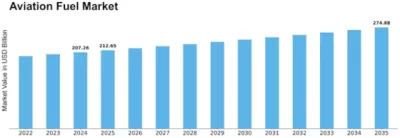
As per Market Research Future analysis, the Aviation Fuel Market Size was estimated at 207.26 USD Billion in 2024. The Aviation Fuel industry is projected to grow from 212.65 USD Billion in 2025 to 274.88 USD Billion by 2035, exhibiting a compound annual growth rate (CAGR) of 2.6% during the forecast period 2025 – 2035.
The aviation industry is undergoing a major transformation as environmental sustainability becomes a central focus for airlines, governments, and global aviation organizations. While aviation fuel remains essential for aircraft operations, the industry is actively seeking solutions that reduce carbon emissions and promote sustainable aviation growth.
One of the key strategies driving this transformation is carbon neutral aviation initiatives. These initiatives focus on reducing greenhouse gas emissions through improved fuel efficiency, adoption of sustainable aviation fuels, and implementation of carbon offset programs.
Aviation contributes a portion of global carbon emissions, and international organizations are working to minimize this environmental impact. The International Civil Aviation Organization (ICAO) has introduced global frameworks that encourage airlines to reduce emissions and improve sustainability.
Airlines are responding by investing in fuel-efficient aircraft and adopting more environmentally friendly operational practices. New aircraft models incorporate lightweight materials and advanced aerodynamic designs that reduce fuel consumption and improve efficiency.
Sustainable aviation fuels are also becoming an important component of carbon reduction strategies. These fuels are produced from renewable feedstocks such as agricultural waste, used cooking oil, and biomass. When used as a blend with traditional jet fuel, sustainable aviation fuels can significantly reduce lifecycle carbon emissions.
Aircraft manufacturers are also contributing to sustainability goals by developing engines that can operate with higher blends of sustainable aviation fuel. These engines are designed to maintain high performance while reducing environmental impact.
Air traffic management improvements also play a role in reducing aviation emissions. Optimizing flight routes and minimizing congestion in airspace can help airlines reduce fuel consumption and improve operational efficiency.
Government policies and environmental regulations are further encouraging airlines to adopt cleaner aviation technologies. Several countries are introducing mandates that require airlines to gradually increase the use of sustainable aviation fuels.
Despite these efforts, achieving carbon neutrality in aviation remains a complex challenge. The production of sustainable aviation fuels must increase significantly to meet global demand, and costs must decrease to make these fuels economically viable.
However, continued investment and technological innovation are expected to accelerate progress in the coming years. Collaboration between airlines, energy companies, and governments will be essential in supporting the transition toward sustainable aviation.
As sustainability initiatives gain momentum, the aviation fuel market will continue evolving to support environmentally responsible aviation growth while maintaining reliable fuel supply for global airline operations.
GLOBAL SUPPLY CHAIN & MARKET DISRUPTION ALERT
Escalating geopolitical tensions in the Middle East, particularly around the Strait of Hormuz and the Red Sea, are creating significant disruptions across global energy, chemicals, and logistics markets. Critical shipping corridors are under pressure, with major oil, LNG, petrochemical, and raw material flows at risk, triggering supply chain delays, freight cost surges, insurance withdrawals, and heightened price volatility. These disruptions are increasing operational risks and cost uncertainties for industries dependent on global trade routes and energy-linked feedstocks.
Access our real-time disruption analysis covering supply chain risks, price outlook scenarios, logistics impacts, and alternative sourcing strategies.
FAQs
1. What is carbon neutral aviation?
Carbon neutral aviation aims to balance aviation emissions through reduction strategies and carbon offset programs.2. How can aviation reduce emissions?
By improving fuel efficiency, using sustainable aviation fuels, and optimizing flight operations.3. Why are sustainable aviation fuels important?
They significantly reduce lifecycle carbon emissions compared to traditional jet fuel.